The very first telegraph line in Aotearoa ran between Ōhinehou Lyttelton and Ōtautahi Christchurch. British engineer Edmund Green was commissioned to establish the line, which became operational in 1862 although delays had meant Green himself did not do the work.
As a result, news from ships arriving in Lyttelton Port could be instantaneously communicated over the hill to Christchurch. Perhaps most significantly, the newly formed newspaper, The Press, was then able to receive and distribute up-to-date news and information more regularly. The Christchurch receiver of the first line was placed in the old Provincial Government Building beneath a clock tower, still standing today in Cathedral Square.
Decades later, Green’s son Richard donated money to the boroughs of Sumner and New Brighton for the construction of two clock towers to memorialise his father and the expansion of telecommunication within Waitaha Canterbury. Immemorial and thus a future continues Luke Shaw’s interest in the politics of communication. It retraces the historical lineage of the telegraph line within Aotearoa and considers the potential that emerges from communication when time and distance are collapsed.
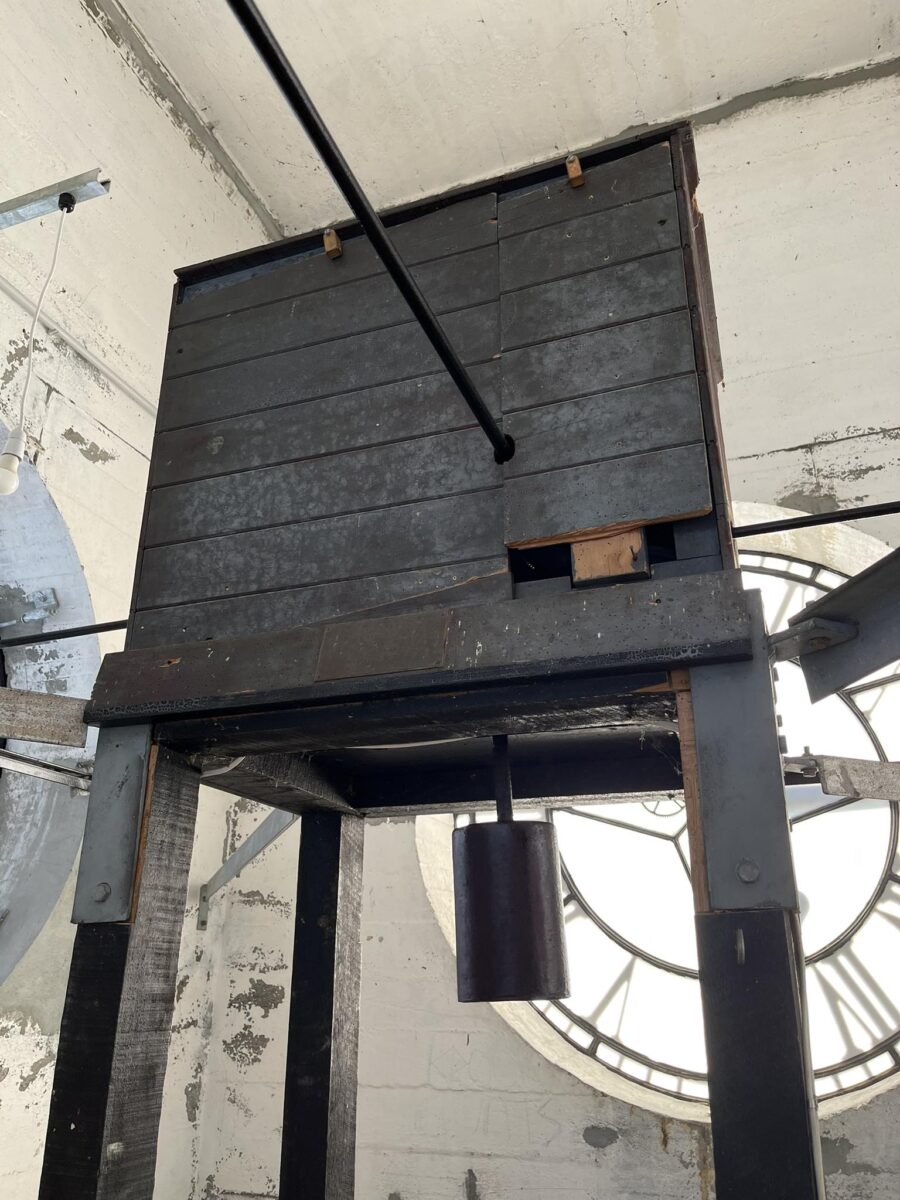
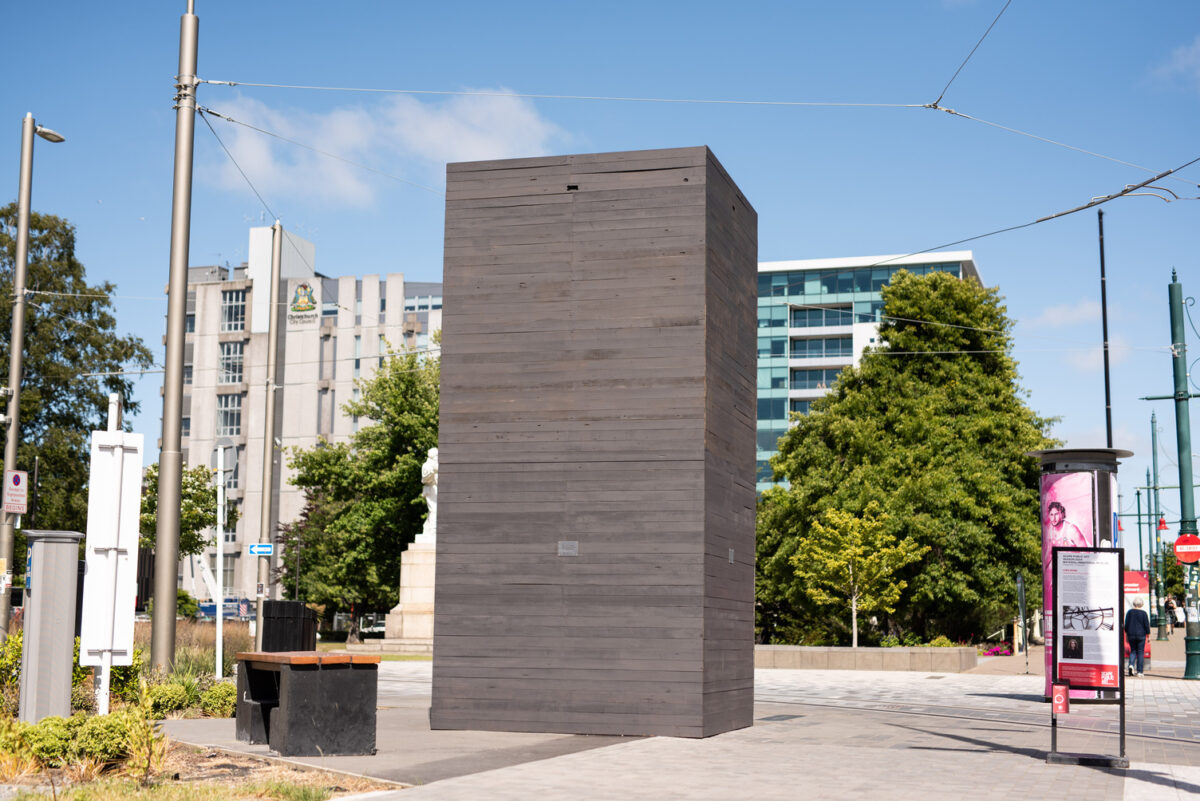
The audio component of Immemorial and thus a future is a field recording of the mechanism in the Scarborough clock tower in Sumner. Heard from the ground as a few faint clicks and booms, inside the cavernous space of the tower the sound is amplified. The structure used here replicates the timber housing in the clock chamber, protecting and shrouding the mechanism in secrecy.
Responding to the SCAPE Public Art Season 2024 theme of Material / Immaterial Worlds, Luke Shaw’s work makes minor histories audible. It reveals the inner workings of the Scarborough clock tower and highlights a little-known history. More broadly, the work considers the ways that language can travel — over water, through a telegraph wire, in print, engraved in stone or by the tick of a clock.