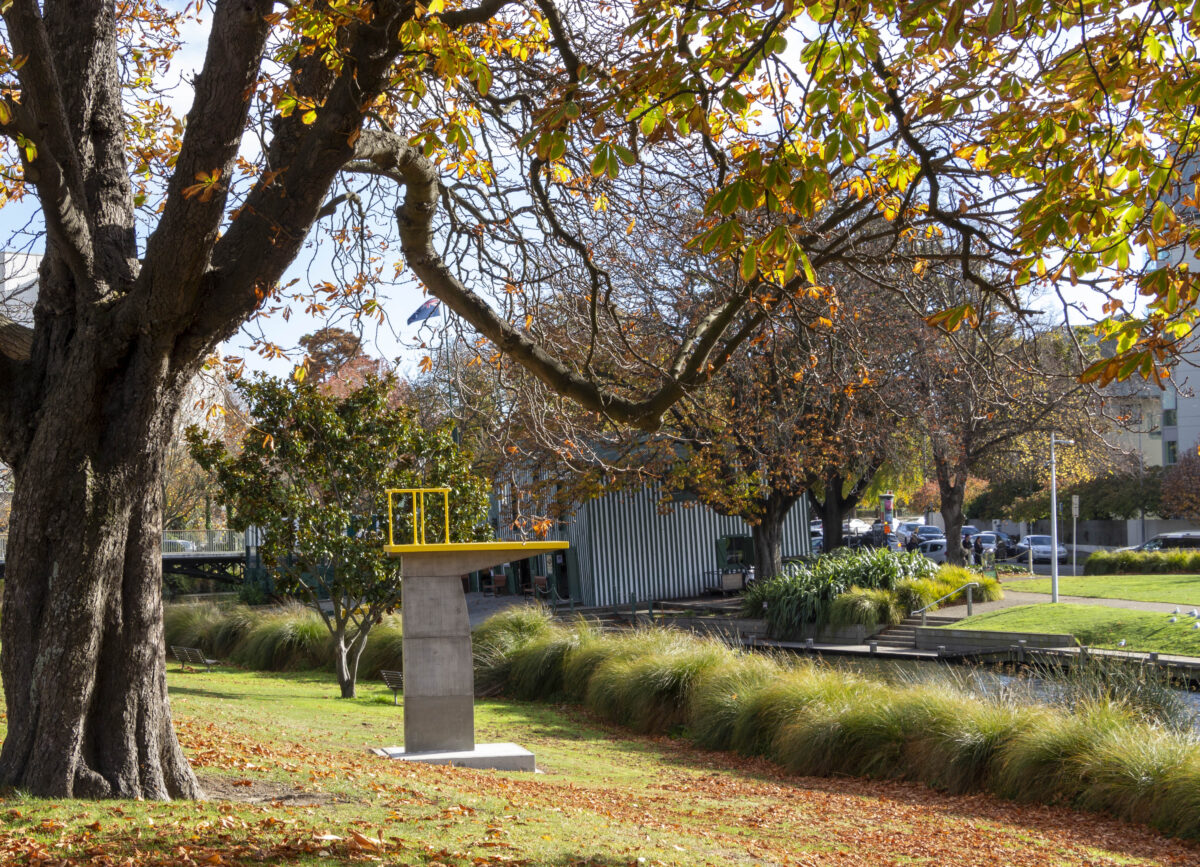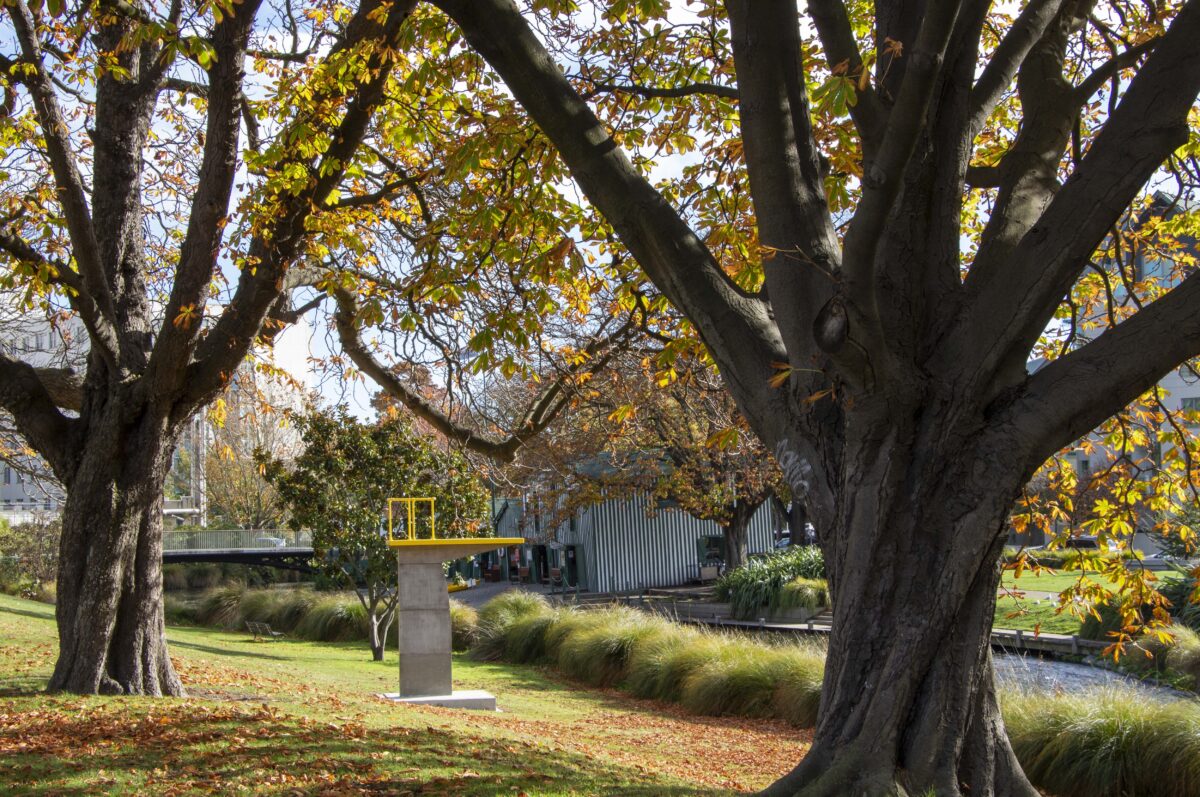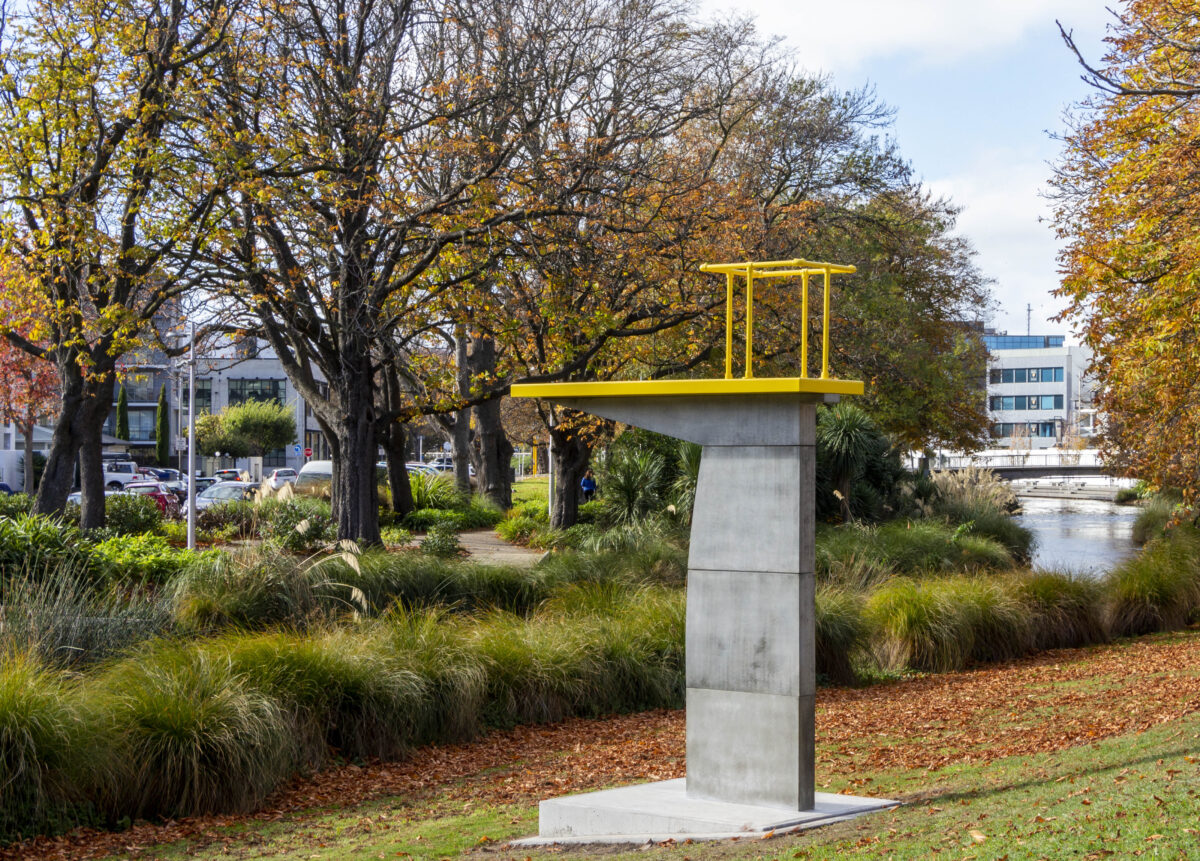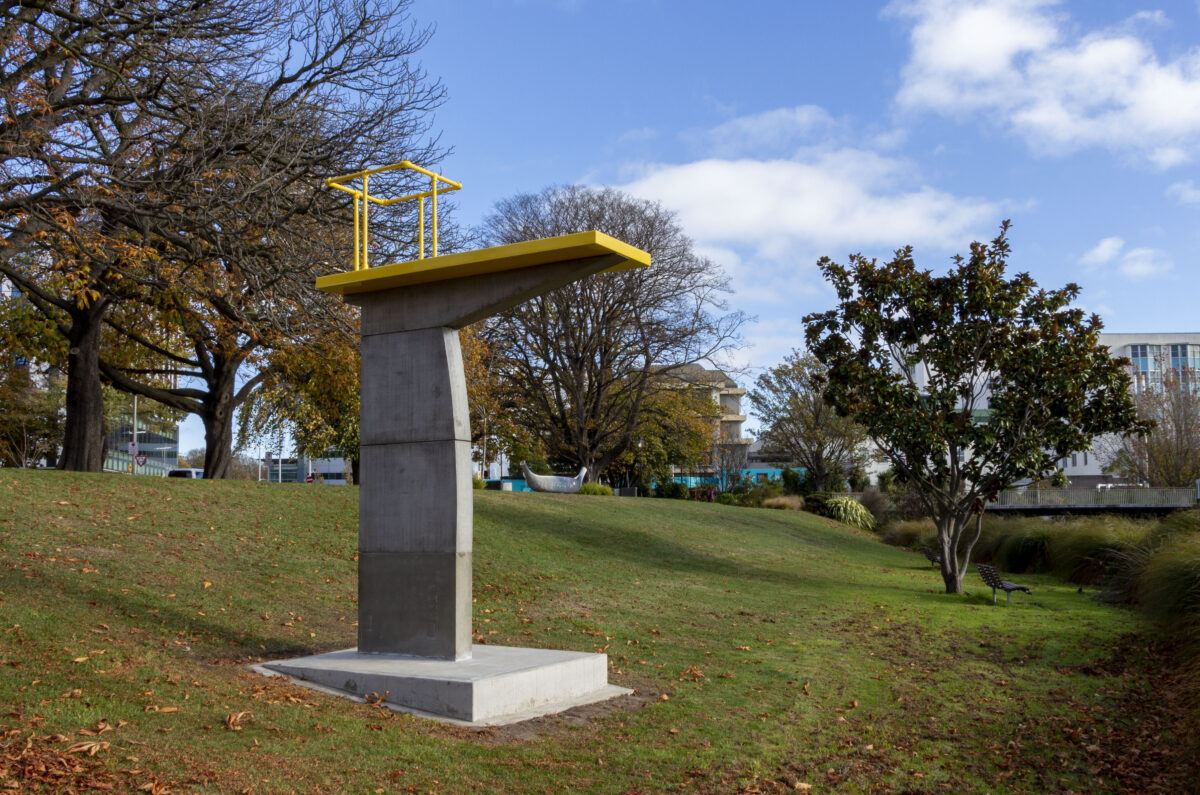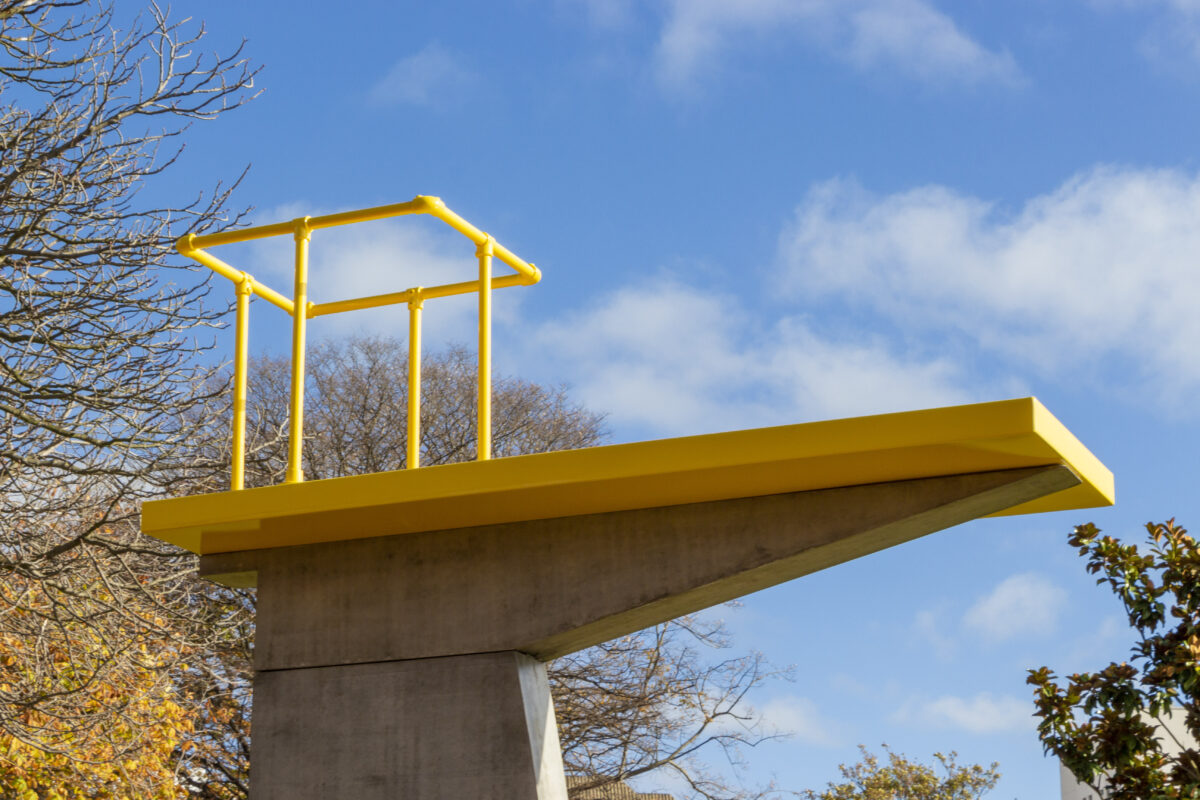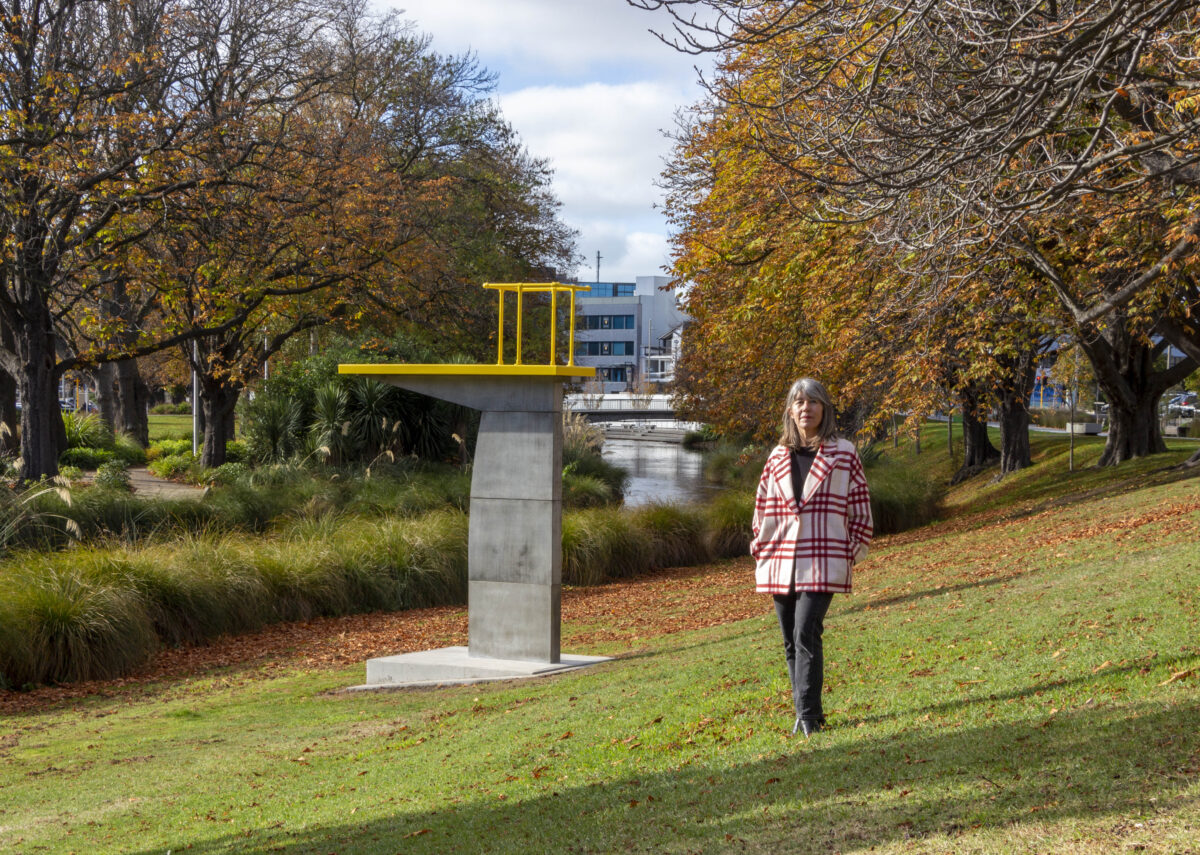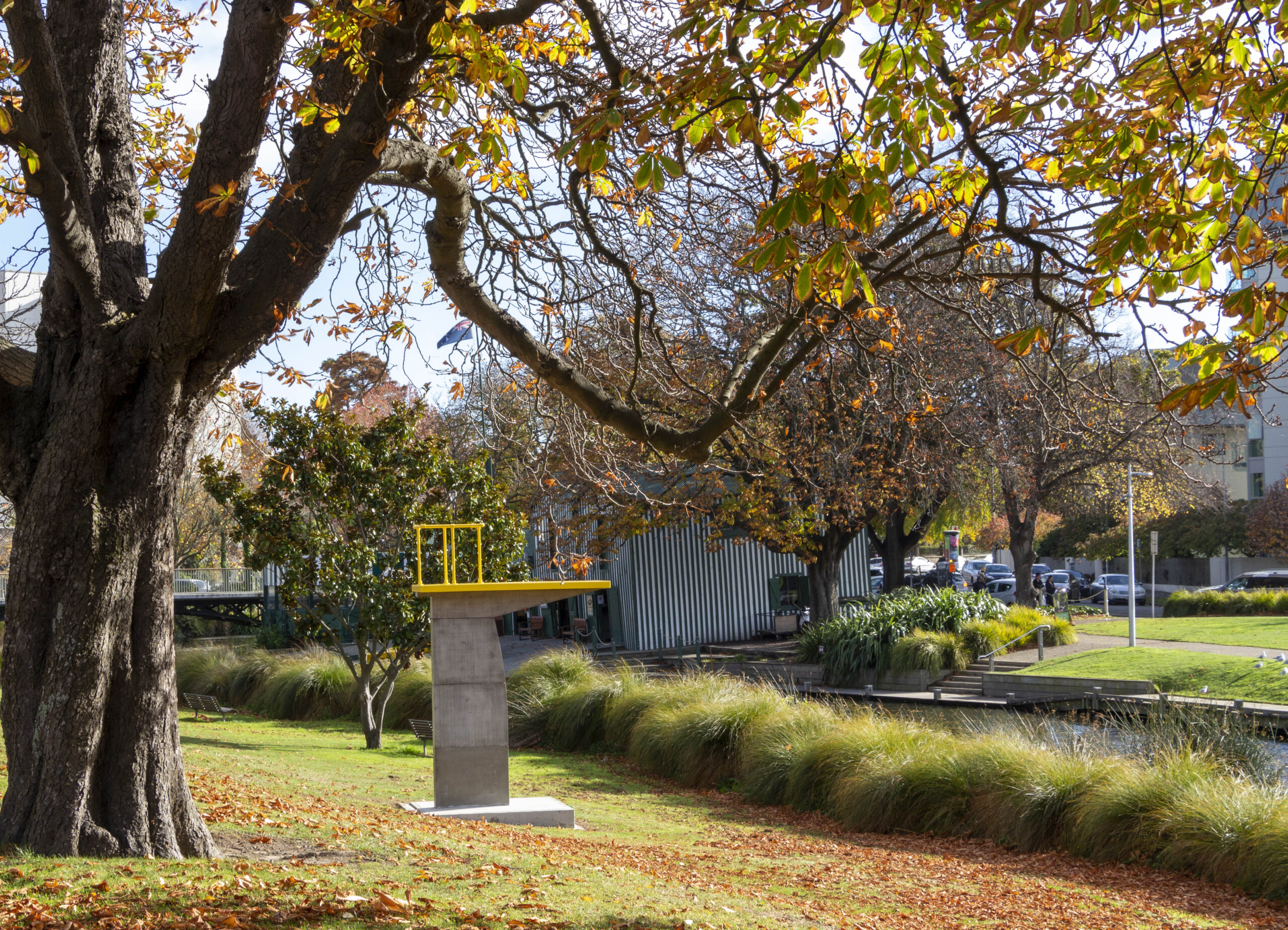
Poised ready for the plunge, Natalie Guy’s diving board is pointedly not positioned above a swimming pool. Stripped of its core business as a launching pad, Guy says, the diving board ‘becomes a surreal, redundant and inaccessible object’.
The Pool makes reference to both David Hockney’s iconic and luxurious Californian paintings, and to the British architect Jane Drew. Drew was a major contributor to the design of the Indian city of Chandigarh, planned in the 1950s as a modernist utopia. Faded and in many ways failed, Chandigarh stands as a symbol of experimentation and hope, yet also a signpost for cultural misunderstanding.
Jane Drew, a leader in her field at a time when female architects were rare, produced many of Chandigarh’s features, including a pool and diving board for a private swimming club. Natalie Guy says, ‘Pools would have been a rarity in 1950s Chandigarh. Much like the city itself, which is an isolated island of modernist architecture and ordered urban design, it harbours a sense of other-worldliness.’
With generous support from:
Sculpture on the Gulf Waiheke Island.
Image caption:
Natalie Guy The Pool 2019. Image courtesy of the artist, Fox Jensen McCrory Gallery and SCAPE Public Art. Photo by Heather Milne.